Featured

Observation

(A theoretical reflection)

Course materials: Grimshaw, Anna, and Amanda Ravetz. 2009. Social Observers: Robert Drew, Albert and David Maysles, Frederick Wiseman in Observational cinema pp. 24-50. Bloomington: Indiana University Press.

Man with a Movie Camera. Dziga Vertov, Soviet Union, 1929, 80 min.

Social observers by Grimshaw and Ravetz is a text mostly concerned with the way we observe things. The authors firstly address the genre of cinema verité and how it has been criticised for claiming to showcase the truth (when in fact, the simple positioning of the camera is already biased). Their focus, however, is not to criticise the movies they analise for what they are not, but for what they are. And their goal is to address observation as a “complex phenomenon that encompasses the technical and the aesthetic, skill and intuition, discipline and innovation” (Grimshaw, Ravetz, 2009, p.26).

In order to do so they analyse three movies, Primary, which follows candidates J.F.Kennedy and Hubert Humphrey, by Drew Associates. Salesman, about bible selling, by Albert Maysles, and Titicut Follies, that addresses institutional life.

In Primary, the authors believe the producers saw the role of the observer as more of a witness, one that was present whenever something was happening. The observer had to be alert to the unexpected, open to the spontaneous, learn what was banal and what was not. What the authors also claim is that Drew’s agenda was very clear throughout the movie. In Salesman, observation acquires a new meaning, it is not about large intense moments as it was on the first movie, but the emotional everyday life of those people. Whereas in Titicut Follies, Wiseman saw observation, according to the authors, as an inquiry, as a way to look closely, attentively and critically at the world.

This text made me think a lot about my way of observing and how I will apply this to the project. As researchers and scientists, we of course want to be as neutral and partial as possible, but, as we read and know, there is no such thing. Every movie and every way of observing follows some sort of agenda or goal. The angles, the sound, the position of the camera, it is all mostly intentional. My first big concern here is that the lack of technical skill will lead to sending a message I am not necessarily aware of or that I did not intend to send. Professional and experienced filmmakers can perfectly manipulate these technologies, we, however, cannot. So that makes me wonder, would our movie be more or less true to reality? Does the lack of deep knowledge of technology account for more truthfulness? Or is it in fact the opposite?

Contrasting this text with the movie “Man with a movie camera” was quite interesting. For more than one hour, Vertov shows us elements of daily life, in his silent experimental documentary. Cars, trams, eyes, horses, people on phones, babies cries, sick people, hurt people, elevators, it is all very chaotic. It seemed to me, particularly by the excerpt from 30:00 to 30:25, that the chaos is exactly what Vertov had in mind when shooting this. For him, if I were to try and guess what observation means, it would probably be something in between Salesman and Titicut Follies. Man With a Movie Camera observes the movement of everyday life, without paying attention to what is going on, but more focused on the movement itself and the chaos it creates. It is similar to Salesman in the sense that it captures the everydayness of life, but also close to Titicut because it looks closely and somewhat critically to the world.

To observe is, very clearly, something that can have different meanings for different people, and different filmmakers. I guess the challenge moving forward is to find out what meaning it has for me and my group and how we will tackle it when doing our project.
Pandemic and the possibilities of New Media

Our last theoretical class was about New Media, and it stuck with me throughout this whole pandemic outbreak. In having to find new ways to do things we usually took for granted, such as attending classes, going to work, working out and interacting with your families and friends, people have truly embraced the visual field, and what we can see now will, hopefully, provide fruitful terrain for visual anthropologists for years to come.

Stewart (2013) talks about the project MyStreet as a public, collaborative anthropology. He also highlights why films are so relevant for cultural recognition. According to him, “it has an extraordinary capacity to plunge its viewers into worlds far away from their own, as if a participant” (p. 318). One quick search on YouTube with the word quarantine will bring us to our own collaborative anthropological project. From diaries about how it is to quarantine in Mexico, how to deal with mental health issues, instructional videos on how to stay fit and what to eat, to celebrities sharing and presenting their shows from their homes. YouTube, and these videos are, at this moment, perhaps our biggest collaborative project. This pandemic might be the most well-documented in history. And the fact that we are all stuck at home, instead of making the job of the visual anthropologist harder, in fact, provides us with original content we could have never imagined before.

However, what exactly is this New Media and why is it so special? This is what Manovich (2001) discusses in his text. The most interesting characteristic that he points out, and that we can clearly see during these trying times of the pandemic is precisely the interactivity. So far, the examples I mentioned focused mostly on production of audiovisual material for distribution on YouTube, however, this is far from being the only way in which New Media is visible in the pandemic. Precisely because people are not allowed to interact with others in real life, online interaction has become a crucial way of communication and getting things done. Manovich describes the user as the co-author of the work and, to me, this is visible in, for example, Instagram lives. Several gyms and fitness studios have been broadcasting their lessons live for their customers, and interaction is a huge part of it.

One can only speculate what kinds of projects will come out of this quarantine, but one thing is for certain, New Media is what is keeping us together and bringing us closer, and I cannot wait for this to be over to see what beautiful material will be produced by us visual anthropologists.

Editing in times of corona

Finding a concept

We were one of the first groups to start filming our project, we wanted to take our time and be able to edit it carefully and have a strong concept. It took us quite some time to agree on the concept, and it was a very interesting process. At one point, we realised that we never discussed, as a group, what was our opinion about the main conflict present in the movie, is tattoo art or not? After having very interesting discussions about it, we managed to come up with the concept we want to show. It seems like the ever-on going discussion of what is art is just as present in the tattoo world as it is anywhere else, but with a few differences. The main difference, of course, is that it is part of someone’s body and implies a much more intimate relationship between artist/client than perhaps any other form of art. It also differs because it is always a collaborative process, the client has as much of a say on the outcome as the artist, which can create conflict. What we also realised during the filming process, is that clients and artists do not always agree on that point, some clients even reported seeing it as a mere accessory, while admitting that the artist would be upset if they heard them say that. Having all these conflicts in mind, we realised that it would make a good movie to show that, and to show how divided this world is. On the one hand, there are tattooers that tend to adopt a very purist point of view, ‘only professionally trained artists can make art’. Others, say that anything made by a tattoo artist is art. While others stay on the fence, some tattoo is art, some isn’t.

We ultimately agreed on presenting this movie as a dialogue. There is no correct answer. This debate will continue on and our goal is to show where it stands now, in Budapest, with some of the most successful artists in the city.

Editing

Since we started filming early, we could all edit together for 3 days. During this time, we would sit in separate computers and each one of us would tackle one interview or one case. We would watch it and divided it by theme, by occasion, or whatever else made sense. Renaming it and cutting out the useless parts, while understanding what it is that we had, and how we could use it. This was extremely useful and I believe it is one of the reasons why we are able to continue the editing process online. We are all familiar with the material and on the same page about what we want to show.

Our skillset is varied, some of us were more familiar with editing tools, while others were a bit less. Because we managed to sit together on at least 3 occasions, we helped each other and got more familiar with the tools. Unfortunately, while we were on our last day of real life editing, we got the news that the university would close due to the outbreak of the corona virus. I remember just sitting there, in the Media Lab, not really grasping what that meant for our lives, our futures and, of course, our projects.

Online editing

Luckily, we had already shot everything, as I mentioned before, so it was just a matter of editing. Unfortunately, only of us was allowed to get Premiere on their laptops and edit the material, and the rest of us is responsible for the remaining things, such as the synopsis. Lilly was the chosen one for the editing task because she has had previous experience with it.

It is hard and unfair that only one person is in charge of something that should be split by 3. We agreed, of course, that she would send us regular updates and ask for our feedback. This has been going very well so far and I attribute that to a couple of reasons. First of all, because we have talked so much about this project, invested so much time and effort, and lengthily debated the concept, that we understand and trust each other. There is no power struggle or desire to overcome someone else’s opinion, we are on the same page, and we fully trust what the other person is doing. Another reason is that this is such a strange unforeseen situation that we’re living in, that the last thing we want is more stress. We want the process to be enjoyable to all of us. As long as Lilly is having fun and enjoying herself while she does it, we will go on, if this changes for any reason, we will find another solution.

One thing I would comment on, however, is the fact that it does feel very bad to not be the person editing, and to not be able to fully support your group members in the project. We started this together, and we planned on going through with all of it together. But alas, this is where we find ourselves, and, hopefully, something good will come out of it.

Them and Me

(a theoretical reflection)

Stephane Breton’s movie, Them and Me (2001), was very interesting to watch, but it annoyed me quite a lot. At first sight, I felt extremely uncomfortable with how the narrator talked about the tribe, starting from the title, “Them and me”, and the way Breton constantly referred to the people in the movie as ‘them’. It felt impersonal, somewhat dehumanised and infantilised, as if those people were a spectacle for Breton to watch. Not to mention the money, the controversial relationships with the people, and so on. Later on the movie, my opinion started to slightly change, as Breton would develop more intimate relations with the members of the tribe, and the way Breton described himself. He expressed many times how annoying he was to the tribe. I am still not quite sure how I feet about the movie though. It feels like it was done with a lot of sensibility, but on the hand, the mere presence of the narration removes, in a way, the voice of the people he was studying. The film felt more like Breton was reading his field notes, and expressing a lot of what he felt during his time there, then a movie about a tribe in Papua New Guinea. At the same time, having this narration helped understand his journey, his struggles, how hard it was to learn the language, to gain their trust, and so on. So I do feel a bit conflicted, because if the narration was the only problem, I would be OK with it, however, there were way more problematic parts than only that. His position as a ‘shopkeeper’, the money he handed to children, the way in which he communicated with the tribe and so on.

The issue of ‘reality’, often discussed in class, occurred to me after reading MacDougall’s text. Although I initially felt uncomfortable with the narration, it did add to the element of reality, although ‘reality’ is never achievable. The presence of the anthropologist is acknowledged in this movie. It is undeniable that someone with a camera walking around will have an impact on the people being observed, so why not make that clear? In a way, it reminded me of Chronicle of a Summer, due to the very clear presence of the filmmakers. The difference here is that Rouch’s movie did not contain a narration.

MacDougall claims that the ethnographic film must make a disclaimer about the subjectivity contained in it, and Breton’s movie achieves this very well. We are under no impression that this movie is portraying the life of those people, it is very clear from the beginning that it is the tribe’s life, but directly influenced by Breton’s presence.

I still feel quite conflicted. I believe this movie excels in presenting the experience of an anthropologist in the field, and how the life of their subjects is influenced by his presence. But, like I said before, it also felt like the movie was more about Breton himself, than the subjects, and still has many many problematic and ethical issues.

First steps

Today was our first time actually following through with our project and starting it. We had a rough idea of our concept and wanted to test it and see how it would work in real life. The idea was to investigate how people attach meaning – or not – to tattoos and how the design and process contribute to that. We contacted two tattoo artists, Bianka Nedbal and Peter Nádor, who coincidentally had international clients on the same day. Bianka is a young artist, very friendly and immediately agreed to help us. Peter is much older and has a very different idea of tattoo, Peter sees it as an art and frequently criticises people who copy other artists. Although Bianka also only tattoos her own art, she is not so outspoken as Peter. We met on Saturday with two of their clients to interview them and film the tattooing process. Peter had an American client, Bryce, who was get a cup of coffee tattooed with a skull on top. He said he was getting it because he will never stop loving coffee. Bianka’s client, Martin, had a much different story, his wife almost had a miscarriage and receive a message during a dream, from a hummingbird, saying everything would be alright and it was. This is exactly what we’re trying to show in the project.

There were many technical challenges, mostly because it was our first time ever doing something like that. Positioning the camera, not wanting to intrude too much, getting the light right, the angle and so on. After the first interview with peters client, we had some time to go to the university and check what we had. We were unhappy about the angle of the interview, the light, and realised we could have done many things differently. All tattoo parlours have very good direct light that we could have just used and we didn’t. So we made a mental note to do that on the next appointment. I was also extremely worried that I had forgotten to check the configuration on the camera and that it had filmed in the incorrect way, I did not have my notes with me, but luckily when we went to university I accessed the notes and everything was ok. That was a relief.

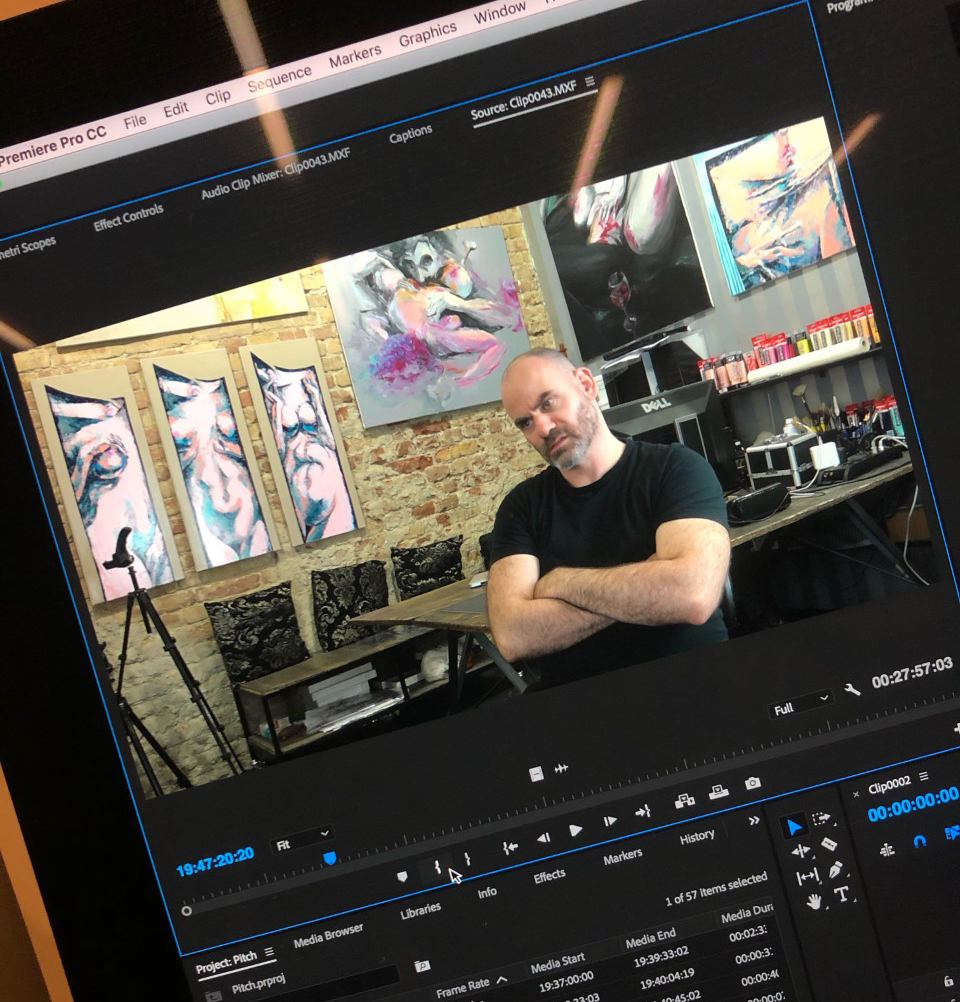
This is Bryce. After the interview, while reviewing it, we noticed the camera was not positioned on eye level, that the background did not have enough depth, and it also does not seem particularly straight. Hopefully we will be able to still use it, but these were already valuable lessons we learned from our first try.

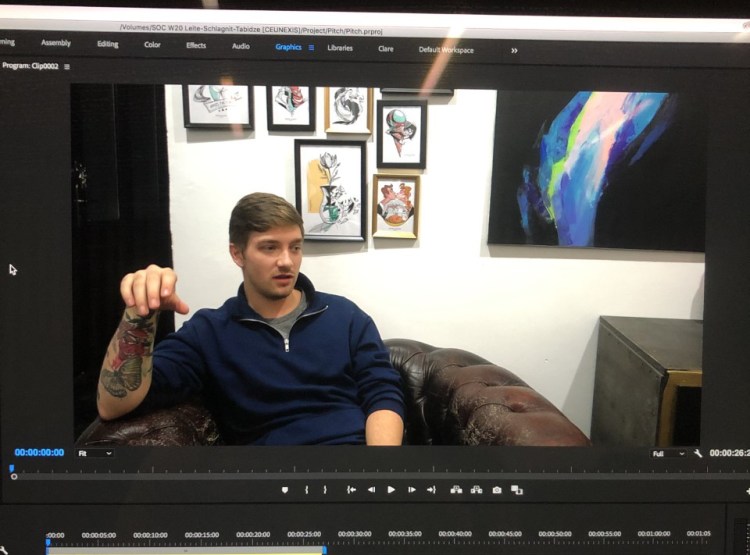
With Bianka’s client, Martin, we were already a bit more aware of the challenges we might face, so we took some more time to find the perfect place to film him. I was happy about it, because it was a well lit place, with many tattoo designs on the background and it provided for a much more interesting location and angle than the previous one. The one concern about Bianka’s studio was the sound, since there were other people talking, tattooing, and music playing. However, when we looked at it again, we realised the camera was place above eye level.

Both the tattoos lasted for a very long time, so we could check the footage in between locations and rethink, see if there were any questions we did not ask, or if there was any shots we needed to redo. I realised we did not get Peter’s client on camera explaining the reason behind the current tattoo he was getting, only his previous ones. So I knew I had to get that when we went back to Peters studio later that day to film the final result of the tattoo. We thought it was relevant to get the final result on camera because we want to show the whole process, and particularly because we want to hear what the clients think about their new design. We also realised that, during the interviews we were positioning the camera either too high or too low, but never on eye level, so that was a bit annoying, but it is all part of the learning process.

The third, and last, interview of the day was the one that made me the happiest in relation to all the aspects that we had initially felt bad about. We interviewed Peter Nádor, and managed to use his tattoo lights to make the lighting ideal, position him in a place with depth and that showed his art pieces and place the camera at eye level. I felt like it was a very productive day and we learned quite a lot throughout this whole process. We are very concerned that we haven’t gotten any feedback on our camera exercises and that maybe we are doing something wrong, but I think that going through this showed me that regardless of feedback and study, the only way to actually learn is to get started and, with the theory in mind, we can more easily identify our mistakes and correct them. Hopefully we’ll be able to use a lot of the material we shot today.

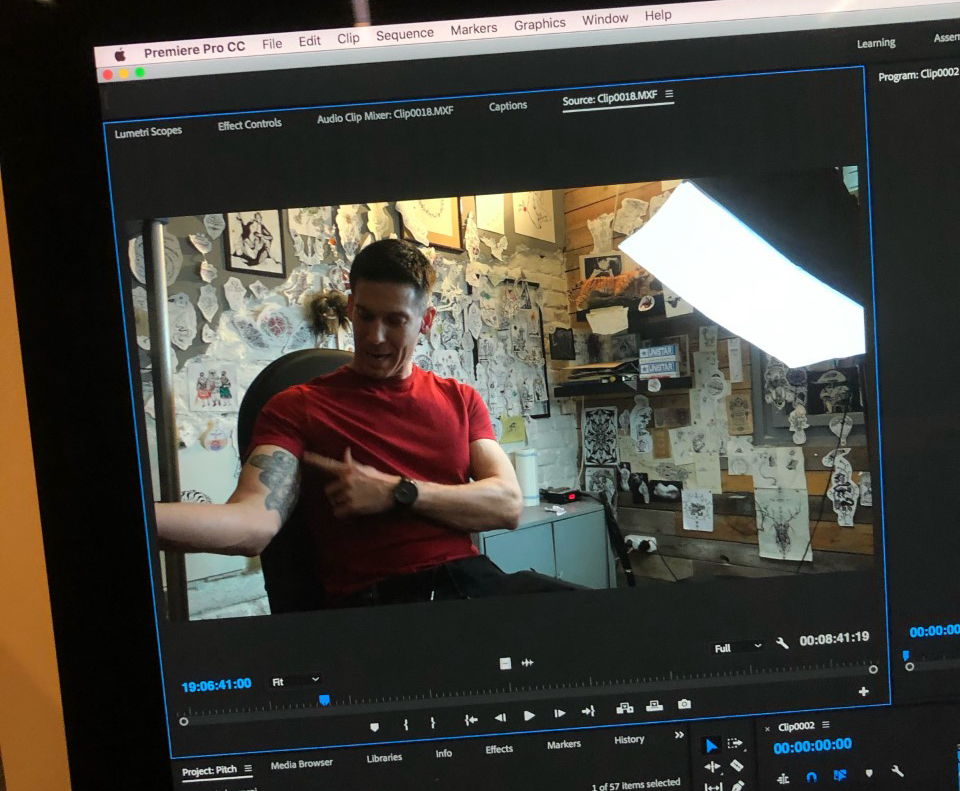
This is the interview with Peter. He is positioned at eye level, there is a lot of depth, we can see his paintings on the back, the tattoo ink, and so on. I think we finally understood how to do this.

Seeing

(A practical reflection)

The first exercise that allowed me to rethink the way I saw on screen was the edit analysis. Not only my own work, but also the ones we analysed in class. I had never before stopped to pay attention to cuts, sounds, camera angles, and so on. After that first exercise, I realised how much work there was to producing any moving picture. Especially the one I analysed, Wild Wild Country, I sensed that there was not even one word or sound or picture, not even one millisecond, that had not been carefully built. At that point, making my own ethnographic film seemed very overwhelming. Would we we able to do so?

What followed was the premiere exercise, which made me feel even more overwhelmed. Although technically it was easy to understand and I felt glad to acquire such skills, it was also a bit daunting. It was a lot. Then came the camera class, where we learned how to look through the lens of the camera. It was very technical, yes, but also allowed me to have a clearer understanding of how I would actually do that. With the knowledge of the camera and the editing tool, I could finally start visualising how we could actually pull this off.

For the camera exercise, we decided to do something fun. We did not want to stick to the basic and film someone doing the dishes or having a chat. Nukri came up with the concept, it would be a competition. Two of our friends would race, one with the stairs, another with the elevator, and we would film that. Of course, there would be no actual race, it was all scripted. Several challenges present themselves during this process. First, the weather. We wanted to start with the outside shots, but as soon as we made this decision, the sun disappeared. We then hurried to get our first friend and start filming. We started with the elevator, which was a big problem, people kept going up and down, opening and closing the doors, and we simply could not monopolise one of the elevators for our own artistic purposes. Then the security came and told us we were not allowed to film there, we needed a permit. Not to mention that everywhere we went, inside the elevator, up the stairs, filming from a different angle, there was a different light, a different white balance, a different everything. We adjusted and readjusted the camera time and time again. It was exhausting, but also very fun. Finally, after a couple of hours, a permit from the university, and promising to pay coffees to our friends, we got every done. What was also challenging was the amount of requirements we had to fulfil. So not only did we have to film our very first motion picture, but we also had to make sure to do the correct shots to fulfil the requirements of the exercise. Now, the next challenge is to edit, I am curious to see how that will go.

About our own project, we have luckily found many talented tattoo artists willing to let us is their process. They seem friendly and excited about the project, but that does not mean they will help us. It involves their clients, their studios and perhaps their reputations, so although they tell us they will help, after our first meeting we end up ghosted by them. However, we now seem to have at least one good character and another great lead on the way, so it is going well at this point. What we really lack is an angle. There are many discussions about it, should we focus on body, on the commercial aspect, on the art on the walls, there are just so many things. It needs to be feasible, ethnographic, anthropologic and interesting. After all, what we want is to create a final movie we will be proud of. I believe we’re on the right path.

Fale sobre você (exemplo de post)

Este é um exemplo de post, publicado originalmente como parte da Blogging University. Inscreva-se em um dos nossos 10 programas e comece o seu blog do jeito certo.

Você vai publicar um post hoje. Não se preocupe com a aparência do seu blog. Não tem problema se você ainda não tiver dado um nome para ele ou se parecer complicado. Basta clicar no botão “Novo post” e dizer por que você está aqui.

Por que fazer isso?

  • Para contextualizar novos leitores. Qual seu objetivo? Por que as pessoas deveriam ler seu blog?
  • Isso ajudará você a se concentrar nas suas próprias ideias para seu blog, bem como o que você pretende com ele.

O post pode ser curto ou longo, uma introdução à sua vida ou uma declaração de missão para o blog, um manifesto para o futuro ou um simples resumo dos tópicos que você planeja publicar.

Para ajudar você a começar, confira algumas perguntas:

  • Por que você está fazendo um blog público, em vez de manter um diário pessoal?
  • Sobre quais assuntos você quer escrever?
  • Com quem você gostaria de se conectar por meio do blog?
  • Se você usar o blog direitinho durante o próximo ano, o que espera conquistar?

Você não precisa se ater a nada disso. Uma das partes mais interessantes sobre os blogs é que eles evoluem constantemente enquanto aprendemos, crescemos e interagimos uns com os outros, mas é sempre bom saber de onde e por que você começou. Além disso, organizar seus objetivos pode dar ideias para outros posts.

Não sabe por onde começar? Escreva o que vier primeiro à cabeça. Anne Lamott, autora de um livro sobre escrita que amamos, diz que você precisa se permitir escrever um “primeiro esboço ruim”. Anne tem razão. Comece a escrever e se preocupe em editar depois.

Quando estiver tudo pronto para publicar, selecione de três a cinco tags que descrevam o foco do seu blog, como escrita, fotografia, ficção, maternidade, gastronomia, carros, filmes, esportes ou o que for. Essas tags ajudarão as pessoas que se interessam por esses tópicos a encontrar seu blog no Leitor. Não deixe de incluir a tag “zerotohero” para que novos blogueiros também encontrem você.

Design a site like this with WordPress.com
Get started